Selecting the Right Tin Containers for Your Automotive Parts
By admin
In the automotive industry, every part needs safe and reliable packaging to prevent damage and maintain quality. Tin containers are becoming a preferred choice because they protect components from dust, impact, and environmental exposure. Choosing the right tin container ensures parts stay protected during storage, transport, and daily handling.
What Are Tin Containers Used for in Automotive Parts
Tin containers are widely used to safeguard automotive components that require protection from dust, moisture, and physical impact. They are preferred for parts that can rust easily or need to be transported long distances.
Automotive Parts Tin Containers are commonly chosen for items that must remain safe, clean, and fully protected. These containers offer an effective barrier that keeps environmental damage away from sensitive components. Using the Tin Containers as packaging prevents counterfeiting as well.
In many automotive supply chains, tin packaging is considered a dependable choice for both storage and export.
Applications
Tin containers are used in various stages of the automotive production cycle. They are ideal for packaging assembly components, replacement parts, and aftermarket supplies that require an airtight seal.
They also play a role in storing lubricants, adhesives, repair kits, and maintenance tools. The strength of tin ensures these items stay intact even under rough handling.
For export-oriented companies, tin packaging is often preferred because it meets international packing and safety expectations.
Types of Automotive Components Packed in Tin Containers
Automotive parts that commonly use tin packaging include spark plugs, small bearings, screws, nuts, bolts, pins, fuses, and electrical terminals. Many delicate metal parts benefit from the rust-free protection tin provides.
Chemical-based products like greases, polishing compounds, or cleaning agents are also packaged in tins for safe handling. Tin containers help maintain product stability and prevent leakage.
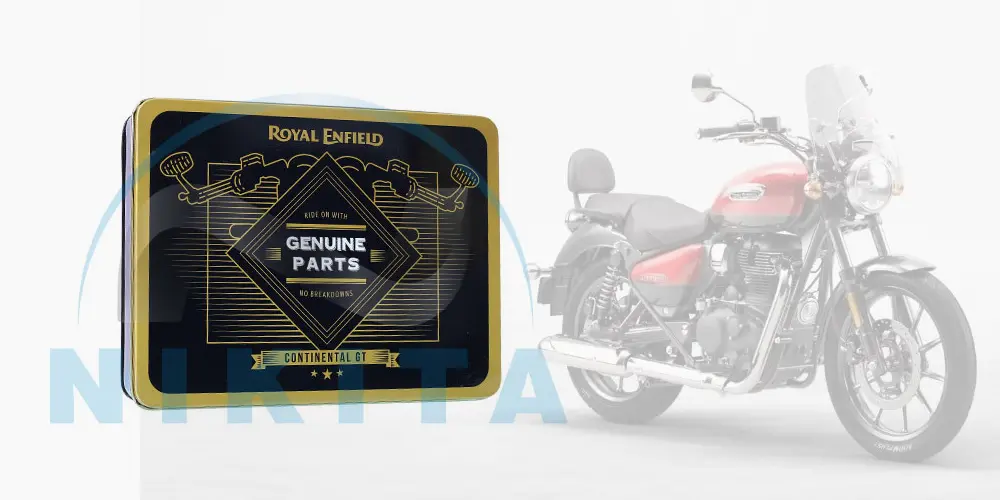
Some premium vehicle kits, accessories, and branded components use decorative tin boxes to enhance presentation and durability.
Benefits of Using Tin Containers for Automotive Parts
Tin containers serve the automotive industry because they combine strength with functional advantages. These benefits influence how safely parts reach assembly lines and customers.
1. Durability
Tin containers provide excellent resistance to dents, impacts, and external pressure. Automotive parts remain safe even when stacked in warehouses or transported across long distances.
Their rigid structure reduces the chance of deformation, which is critical for precision components. This makes tin reliable for demanding industrial environments.
2. Corrosion Resistance
Tin has natural anti-corrosion properties. This helps automotive parts maintain their original condition over extended storage periods.
Since many automotive items are metal-based, corrosion resistance prevents quality degradation. The ability to safeguard against moisture and rust is a major reason tin is widely adopted.
3. Safe Storage
Safety is essential in automotive operations. Tin packaging prevents contamination from dust, oil, and environmental pollutants.
For small or sharp metal parts, tin containers reduce accidental injuries during handling. They create an organized storage system that streamlines assembly processes.
4. Long Term Protection
Tin offers a durable shield that supports long-term warehousing. Automotive companies often store components for months before usage.
Long-term stability ensures that parts remain usable and free from damage. This helps maintain production consistency.
5. Ease of Transport
Tin containers are strong and stackable, allowing efficient transportation. Their rigidity ensures parts do not shift or break during movement.
This contributes to lower logistics risks and improved delivery performance.
6. Prevents counterfeiting
Engaging Tin Containers as a Packaging option prevents the counterfeiting and it guarantees no spurious and counterfeits.
7. Stylish Branding option
Tin Containers provide a stylish look to the Material packed and also tells the end users that the Material is from a very serious Business house and its serious to the Brand owners,
8. High Brand recall
Since these Tin Containers will find multiple utilities, the Brand Recall will be very high.
Simple Explanation of Why Tin Packaging Works Well
Below is a quick breakdown of why Automotive Parts Tin Containers are preferred. These points help illustrate their value in the automotive supply chain.
- They protect against rust and moisture
- They prevent physical damage during transport
- They allow organized storage in warehouses
- They are reusable and environmentally friendly
- They support branding and labeling needs
How Tin Containers for Automotive Parts Are Manufactured
Tin container manufacturing involves precision engineering and strict quality control. Each step contributes to creating a container that supports the automotive industry’s safety requirements.
Material
Tin containers are typically made from tinplate, which is steel coated with a thin layer of tin. Tinplate combines strength with anti corrosion properties.
The quality of tinplate affects durability and performance. Manufacturers select grades based on the intended use of the container.
Forming, Shaping, and Welding
The tinplate sheets are cut, shaped, and formed into the desired container design. Welding or seaming is performed to join sections securely.
These processes ensure that the structure remains strong under industrial handling conditions. Smooth edges and precise seams support safety and consistency.
Coating and Surface Treatment
Many containers include internal coatings that prevent chemical reactions with metal parts. External coatings help improve appearance and protect against scratches.
Surface treatments also improve resistance to environmental exposure. Protective layers enhance the lifespan of the container.
Printing and Branding
For automotive parts, clear labeling and branding are important. Tin containers can be printed with product details, barcodes, or safety instructions.
High quality printing ensures legibility throughout the supply chain. This supports easy identification and tracking of components.
Key Factors to Consider When Selecting Tin Containers for Automotive Parts
Choosing the right tin packaging requires evaluating several technical aspects. These factors ensure compatibility with both the product and the storage or transport conditions.
Size and Shape
Tin containers come in multiple dimensions. Choosing the right size prevents movement inside the box and enhances protection.
Shapes vary based on parts. For example, long, narrow tins may suit tools, while round tins work better for greases or compounds.
Thickness and Tinplate Grade
Tinplate thickness influences strength and durability. Automotive parts often need higher-grade material to withstand rough handling.
Selecting the right grade ensures the container can support the part’s weight and intended use.
Internal Coating
Automotive components require protection from rust and chemical reactions. Internal coatings act as a safeguard to ensure parts remain unaffected.
The coating type depends on whether the stored item is metallic, chemical-based, or sensitive to moisture.
Airtightness and Sealing
Airtight containers prevent dust, oil, and external particles from entering. This is especially important for precision components.
Seal quality also influences transport safety, particularly for chemical-based automotive products.
Stackability and Transport Safety
To reduce risk during shipping, containers should stack securely. Strong structural integrity ensures stability in warehouses and during long hauls.
Good stackability also improves space efficiency.
Compliance and Quality Standards
Automotive packaging often follows specific industrial standards. Choosing compliant containers ensures consistency across global markets.
Quality standards also help reduce product damage rates and maintain supply chain reliability.
MOQ and Lead Time
For B2B buyers, minimum order quantity and production lead time are essential considerations. Understanding supplier capacity helps ensure an uninterrupted supply.
Reliable lead times keep production schedules smooth.
Customized Tin Containers for Specific Automotive Parts
Customization allows automotive companies to meet precise packaging needs. This is especially important for branded or specialized components.
Custom Shapes
Unique parts may need uniquely shaped tins. Custom shaping helps achieve a snug fit that improves safety.
Custom Printing
Companies may require detailed labels, branding, or handling instructions. Custom printing supports clearer communication.
OEM Branding
Automotive brands often need packaging that reflects their identity. OEM-branded tins create a professional and consistent experience.
Protective Internal Lining
Some components require foam inserts or protective lining. This ensures the parts remain stable inside the container.
Industry Specific Customizations
Automotive segments such as electric vehicles or heavy-duty machinery often demand specialized packaging. Tin containers can be tailored to meet these niche requirements.
Conclusion:
Selecting the right tin container is essential for protecting automotive components and maintaining supply chain efficiency. Understanding materials, manufacturing processes, and selection factors helps ensure product safety from storage to delivery.
With the growing need for secure industrial packaging, Automotive Parts Tin Containers continue to be an important choice. By evaluating quality standards and customization options, automotive companies can choose the best solution for their parts.
Ready to upgrade your automotive parts packaging? Reach out to us today for high-quality, reliable tin container solutions.
Get Help
Which automotive parts are usually packed in tin containers?
Tin containers are often used for spark plugs, bearings, screws, terminals, grease-based products, adhesives, and small precision components that require safe, organized packaging.
Can you customize tin containers for unique automotive components?
Yes. We provide customized Tin containers for specific shapes, internal linings, foam inserts, or branded printing to suit specialized automotive parts or OEM requirements.
What internal coatings are used for automotive tin containers?
Internal coatings prevent rust, moisture damage, or chemical reactions. The coating choice depends on whether the part is metallic, chemical-based, or requires moisture protection.
How important is airtight sealing for automotive parts packaging?
Airtight sealing prevents dust, oil, and moisture from entering the container. It is especially important for precision auto parts, chemical products, and export shipments.
Are tin containers suitable for storing heavy automotive components?
Yes. Tin containers made with higher tinplate thickness can safely support heavy components. They are designed to handle industrial handling, stacking, and long-distance shipping.
Why no counterfeits?
Bringing Tin Containers into packaging ensures no faking is possible as it requires more professional approach to the Marketing side which every Tom Dick and Harry cannot follow with.
Ready to elevate your brand with premium tin packaging?
Get in touch with us today!
(or)